
My Tuna Carpaccio Recipe
INGREDIENTS
Serves 4
4 pieces (4 ounces each) sushi-quality yellowfin tuna
cut 1⁄2 inch thick
Fine sea salt and freshly ground white pepper
4 tablespoons extra-virgin olive oil
2 teaspoons thinly sliced fresh chives
1 lemon, halved and seeded
Toasted baguette slices for serving
TUNA CARPACCIO COMES HOME
At Le Bernardin, the creative process isn’t always linear. Sometimes a dish starts as one thing, evolves into something else and then comes full circle back to where it began.
I think of our tuna carpaccio, probably the most enduring and celebrated item on our menu–so much so that I can’t take it off.
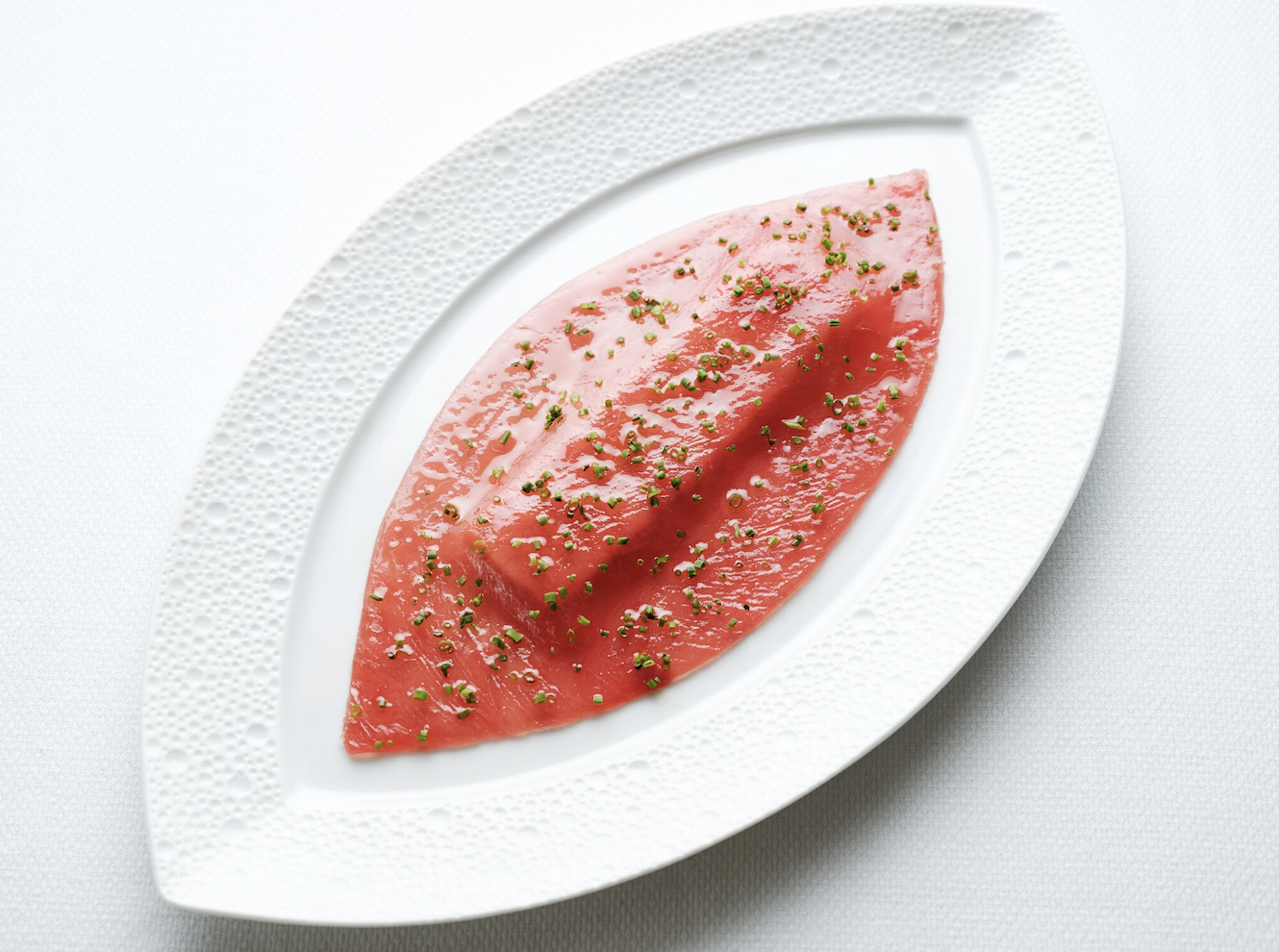
The current version features a thin–almost translucent—sheet of yellowfin tuna blanketing a crisp plank of baguette, layered with a rectangle of foie gras terrine.
Like so many dishes at the restaurant, it is an iteration of something that came before. Gilbert LeCoze (who founded Le Bernardin with his sister Maguy) introduced tuna carpaccio to the menu in 1986. He wanted to do a seafood version of the beef carpaccio created in 1950 at Harry’s Bar in Venice, named for the painter Vittorio Carpaccio.
Gilbert’s interpretation was seasoned simply with lemon juice, olive oil, salt and pepper. It was a revelation at the time–an elevated French seafood restaurant serving raw fish, almost defiant in its simplicity.
In 2003, I was traveling in Scandinavia with my friend and fellow chef Laurent Manrique. We were eating at a modernist-minded restaurant in Stockholm, where they served us elk. It was so rare that, I hate to say, it was almost inedible. But it struck a chord. Suddenly in my head, I could taste it—tuna carpaccio with foie gras. When I got back to New York, I immediately started working on the dish and, just like that, it came together.
As popular as it has become, it is one of those restaurant dishes that is, perhaps, a bit too involved to make at home. A riff on Gilbert’s original version, however, made total sense for my book Seafood Simple. It was the embodiment of everything the book stood for—quality seafood, prepared with care and restraint.
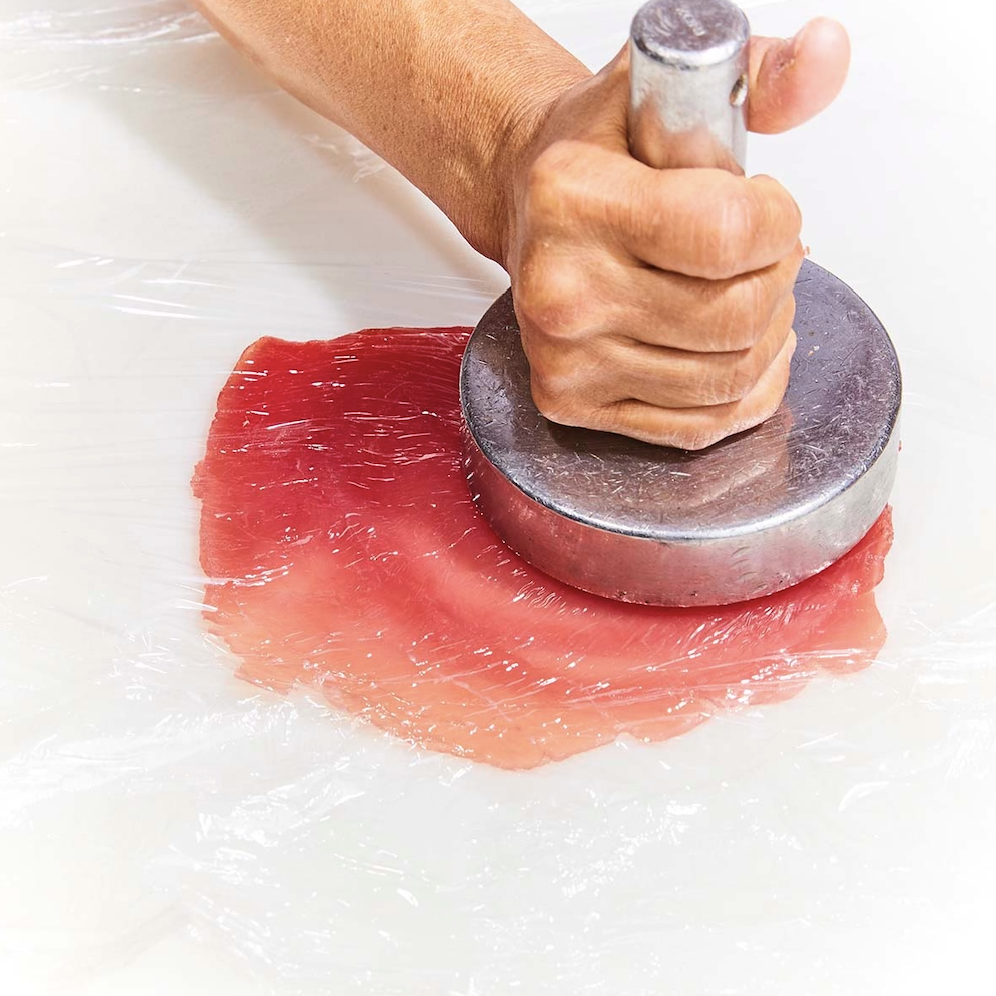
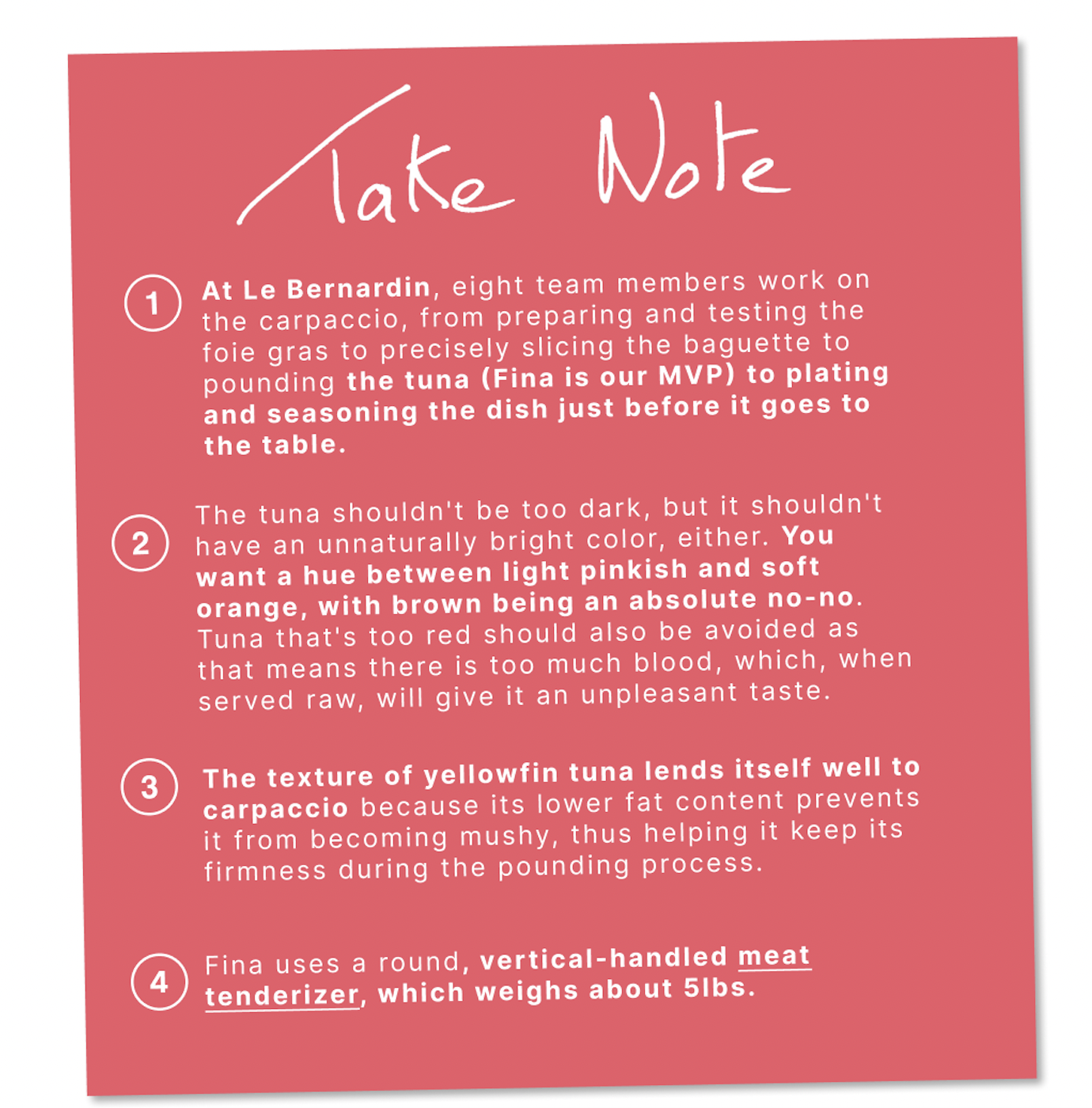
The key to making good tuna carpaccio isn’t complicated—you have to buy good tuna. I prefer yellowfin; bluefin and bigeye are too fatty and can break apart when pounded thin. Then it’s a matter of using a meat tenderizer to pound the tuna to the just-right thickness, about two-tenths of an inch.
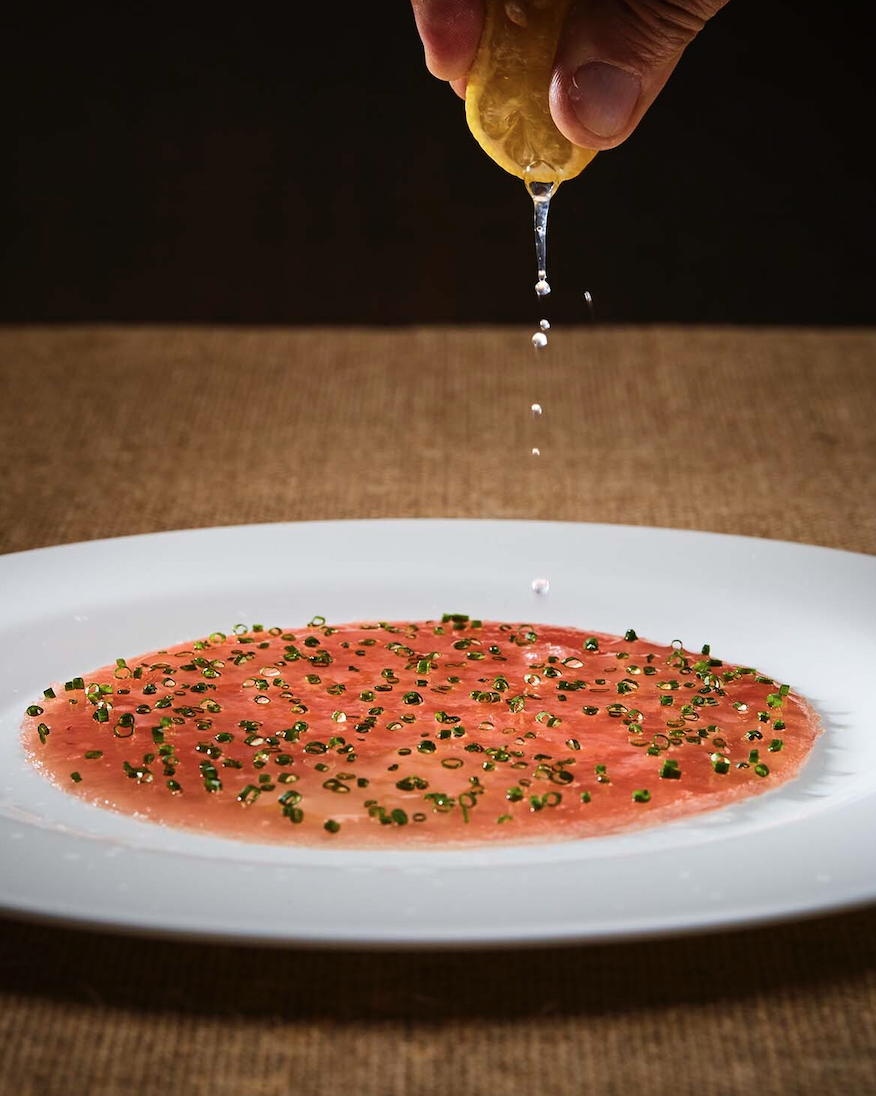
Finally, season the tuna just like we do at the restaurant, being sure to add the lemon juice just before serving. Otherwise, the acid will begin to “cook” the fish, much like it does with ceviche.
Oh, and a pro tip—chill your serving plates. It helps keep the carpaccio nice and cold.
So, yes, this dish is simple–but as the back story of it attests, simple is never that simple.
Instructions
Cover a work surface, such as a counter or table, with a large sheet of plastic wrap. Place 1 piece of tuna in the center and cover it with another large sheet of plastic. (See photos.)
Flatten the tuna with a meat pounder (or a heavy-bottomed saucepan), using a fluid motion that combines hitting the tuna in the center and sliding the surface of the pounder over the fish, pressing it outward. Continue pounding and pressing out the tuna until it forms a very thin, even round, about 9 inches in diameter.
Place an 8-inch round plate, bowl, or cake pan to use as a cutting guide over the tuna (still keeping the fish covered with plastic) and use a sharp knife to cut through the tuna and both layers of plastic, resulting in an 8-inch round. Leave the plastic on the tuna and transfer to a sheet pan. Repeat with each portion of tuna. Refrigerate for 30 minutes. (The tuna can be pounded and cut up to a few hours ahead; cover the entire tray with plastic and refrigerate.)
When ready to serve, pull the top plastic sheet off one tuna round and place the tuna on the center of a large, chilled dinner plate, plastic side up. Remove the plastic from the top of the tuna. Repeat with the remaining 3 tuna rounds.
Season each round with sea salt and white pepper. Dip a wide pastry brush in the olive oil and coat each piece of tuna generously with oil. Sprinkle each portion with the chives, then squeeze lemon juice over the top.
Wipe the edge of each plate with a towel. Serve immediately, with the toasted baguette slices on a separate plate alongside.